
About me
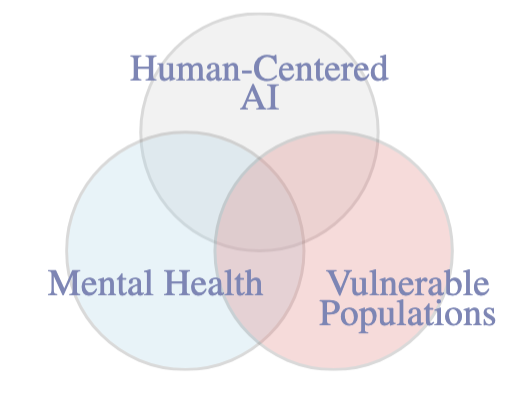
I examine the societal and ethical implications of multimodal and AI-mediated communication, such as the emerging disparities and risks associated with video-based social media and AI companions. I also advance AI-empowered data science by developing novel workflows leveraging Vision Language Models for video analysis at scale. My work has been published across top computing (ACM CSCW, ACM CHI, IEEE HRI), information science (JASIS&T, ASIS&T, L&ISR, ACM CHIIR), and health venues (JMIR, IEEE ICHI). I have received multiple research awards and scholarships from conferences, UT Austin, Berkeley Center for New Media, and the SICSS-Stanford.
I completed my Ph.D. at The University of Texas at Austin, advised by Dr. Yan Zhang, where I was also a research associate at the Computational Affective and Social Cognition Lab, led by Prof. Desmond C. Ong (Psychology) and Prof. Jessy Li (CS). I graduated from Peking University in 2021 with two B.S. degrees in Information Management and Economics.
News
- 🖌️ CSCW 2025 — attended the Doctoral Consortium, presented two papers, and met so many wonderful people! Nov 2025
- 🤝 Co-organized Workshop — "Design as Hope: Reframing Complex Societal Challenges Through Collaborative Reflection" at CSCW 2025. Nov 2025
- 🏫 Summer Institute in Computational Social Science (SICSS) — Stanford University, Aug 4–15, 2025
- 🎓 Oxford Internet Institute–UC Berkeley Doctoral Program — Full scholarship ($2,500), Jul 25, 2025
- 📄 Full paper accepted by ASIS&T 2025 — "Video-Mediated Emotion Disclosure: A Study of Mental Health Vlogging by People with Schizophrenia on YouTube", Jun 2025
- 🛠️ Consortium for the Science of Sociotechnical Systems (CSST) — Syracuse University, May 28–Jun 1, 2025
- 📄 Full paper accepted by CSCW 2025 — "From Regulation to Support: Centering Humans in Technology-Mediated Emotion Intervention in Care Contexts", Jun 2025
- 🤖 CHI 2025 LBW accepted — Experimented with LLMs' visual concept understanding with social media videos on depression, Feb 2025
- 📄 New CSCW 2025 preprint — "When I lost it, they dragged me out": How the Sociotechnical Ecosystem of Resources Empowers Marginalized Young Adults' Mental Health Care-Seeking, Feb 2025
- 🏆 Best Paper Awards from ASIS&T SIG-USE & SIG-HLTH — Young Adults' Mental Health Help-Seeking Journey, Oct 2024
- 🖌️ CSCW 2024 poster — "Using Large Language Models to Assist Video Content Analysis: An Exploratory Study of Short Videos on Depression", Jul 2024
Research

Human-Centered AI
I reimagine AI that keeps people — their identities, emotions, and relationships — at the center. My work aim to design care-oriented and emotion-aware AI that support emotional expression. I investigate AI systems that align with care ethics and articulates ethical design guidelines so that AI strengthens rather than replaces human connection.
- From Regulation to Support: Centering Humans in Technology-Mediated Emotion Intervention in Care Contexts. CSCW 2025. [PDF]
[BibTeX]
@article{liuRegulationSupportCentering2025, title = {From Regulation to Support: Centering Humans in Technology-Mediated Emotion Intervention in Care Contexts}, author = {Liu, Jiaying "Lizzy" and Zhuo, Shuer and Li, Xingyu and Dillon, Andrew and Howell, Noura and Smith, Angela D. R. and Zhang, Yan}, year = {2025}, month = {oct}, journal = {Proceedings of the ACM on Human-Computer Interaction}, volume = {9}, number = {7}, pages = {CSCW424:1--CSCW424:32}, doi = {10.1145/3757605} } - Designing Identity-Affirming Generative AI for Visual Emotional Expression: Empowering Marginalized Young Adults. CSCW Doctoral Consortium 2025. [PDF]
[BibTeX]
@inproceedings{liuDesigningIdentityAffirmingGenerative2025, title = {Designing Identity-Affirming Generative AI for Visual Emotional Expression: Empowering Marginalized Young Adults}, author = {Liu, Jiaying "Lizzy"}, year = {2025}, month = {oct}, booktitle = {Companion Publication of the 2025 Conference on Computer-Supported Cooperative Work and Social Computing}, series = {CSCW Companion '25}, pages = {4--7}, publisher = {Association for Computing Machinery}, doi = {10.1145/3715070.3747331} } - Design for Hope: Cultivating Deliberate Hope in the Face of Complex Societal Challenges. CSCW 2025 Workshop. [PDF]
[BibTeX]
@misc{kimDesignHopeReimagining2025,
  title = {Design as Hope: Reimagining Futures for Seemingly Doomed Problems},
  author = {Kim, JaeWon and Liu, Jiaying "Lizzy" and Pyle, Cassidy and Somanath, Sowmya and Popowski, Lindsay and Shen, Hua and Fiesler, Casey and Hayes, Gillian R. and Hiniker, Alexis and Ju, Wendy and Mueller, Florian "Floyd" and Arif, Ahmer and Kotturi, Yasmine},
  year = {2025},
  eprint = {2503.07586},
  publisher = {arXiv},
  doi = {10.48550/arXiv.2503.07586}
}
Multimodal Communication
I study how multimodal media reshape the way people seek and share health information in everyday life. Using large vision–language models, I develop workflows to analyze video-based social media at scale, surfacing the disparities and risks that emerge in the visual-mediated communication. I aim to reveal the dynamics among visual norms, social media, and GenAI images at scale.
- Decoding Visual Storytelling in Mental Health Narratives: Aesthetics, Disparity, and Peer Support in YouTube Vlogs. Social Media + Society (under review); Accepted ICA 2026. [PDF]
[BibTeX]
@article{liuDecodingVisualStorytelling2025, title = {Decoding Visual Storytelling in Mental Health Narratives: Aesthetics, Disparity, and Peer Support in YouTube Vlogs}, author = {Liu, Jiaying "Lizzy" and Wang, Yunlong and Jue, Allen and Lyu, Yao and Su, Yiheng and Niu, Shuo and TeBlunthuis, Nathan and Zhang, Yan}, year = {2025}, journal = {Social Media + Society}, note = {Under review; accepted by ICA 2026 for presentation} } - Can Large Language Models Grasp Concepts in Visual Content? A Case Study on YouTube Shorts about Depression. CHI EA 2025. [PDF]
[BibTeX]
@inproceedings{liuCanLargeLanguage2025, title = {Can Large Language Models Grasp Concepts in Visual Content? A Case Study on YouTube Shorts about Depression}, author = {Liu, Jiaying "Lizzy" and Su, Yiheng and Seth, Praneel}, year = {2025}, booktitle = {Extended Abstracts of the CHI Conference on Human Factors in Computing Systems}, series = {CHI EA '25}, eprint = {2503.05109}, doi = {10.1145/3706599.3719821} } - Harnessing LLMs for Automated Video Content Analysis: An Exploratory Workflow of Short Videos on Depression. CSCW Companion 2024. [PDF]
[BibTeX]
@inproceedings{liuHarnessingLLMsAutomated2024, title = {Harnessing LLMs for Automated Video Content Analysis: An Exploratory Workflow of Short Videos on Depression}, author = {Liu, Jiaying (Lizzy) and Wang, Yunlong and Lyu, Yao and Su, Yiheng and Niu, Shuo and Xu, Xuhai "Orson" and Zhang, Yan}, year = {2024}, month = {nov}, booktitle = {Companion Publication of the 2024 Conference on Computer-Supported Cooperative Work and Social Computing}, series = {CSCW Companion '24}, pages = {190--196}, publisher = {Association for Computing Machinery}, doi = {10.1145/3678884.3681850} } - Modeling Health Video Consumption Behaviors on Social Media. CSCW 2024. [PDF]
[BibTeX]
@article{liuModelingHealthVideo2024, title = {Modeling Health Video Consumption Behaviors on Social Media: Activities, Challenges, and Characteristics}, author = {Liu, Jiaying and Zhang, Yan}, year = {2024}, month = {apr}, journal = {Proceedings of the ACM on Human-Computer Interaction}, volume = {8}, number = {CSCW1}, pages = {208:1--208:28}, doi = {10.1145/3653699} } - Video-Mediated Emotion Disclosure: Expressions of Fear, Sadness, and Joy by People with Schizophrenia on YouTube. ASIS&T 2025. [PDF]
[BibTeX]
@article{liuVideoMediatedEmotionDisclosure2025, title = {Video-Mediated Emotion Disclosure: Expressions of Fear, Sadness, and Joy by People with Schizophrenia on YouTube}, author = {Liu, Jiaying "Lizzy" and Zhang, Yan}, year = {2025}, journal = {Proceedings of the Association for Information Science and Technology}, volume = {62}, number = {1}, pages = {432--444}, doi = {10.1002/pra2.1268} } - From Pixels to Concepts: How AI Interprets Visual Concepts in Social Media Videos? ASIS&T 2025. [PDF]
[BibTeX]
@article{liuPixelsConceptsHow2025,
  title = {From Pixels to Concepts: How AI Interprets Visual Concepts in Social Media Videos? A Case Study of Mental Health YouTube Shorts},
  author = {Liu, Jiaying "Lizzy" and Su, Yiheng and Seth, Praneel},
  year = {2025},
  journal = {Proceedings of the Association for Information Science and Technology},
  volume = {62},
  number = {1},
  pages = {417--431},
  doi = {10.1002/pra2.1267}
}

Health Behavioral Change & Well-Being
I examine how people — especially marginalized communities — change health behaviors and navigate mental health care across digital and everyday settings. This line of work informs responsible technologies that support meaningful behavioral change for well-being.
- "When I lost it, they dragged me out": How Care Encounters Empower Marginalized Young Adults' Mental Health Care-Seeking. CSCW 2025. [PDF]
[BibTeX]
@misc{liuWhenLostIt2025, title = {"When I Lost It, They Dragged Me out": How Care Encounters Empower Marginalized Young Adults' Mental Health Care-Seeking}, author = {Liu, Jiaying "Lizzy" and Zhang, Yan}, year = {2025}, month = {feb}, eprint = {2502.11277}, publisher = {arXiv}, doi = {10.48550/arXiv.2502.11277} } - Exploring Young Adults' Mental Health Help-Seeking Journey. ASIS&T 2024. (Best Paper Award) [PDF]
[BibTeX]
@article{liuExploringYoungAdults2024, title = {Exploring Young Adults' Mental Health Help-Seeking Journey: Preliminary Findings on Resource Navigation Behavior}, author = {Liu, Jiaying and Zhang, Yan}, year = {2024}, journal = {Proceedings of the Association for Information Science and Technology}, volume = {61}, number = {1}, pages = {570--575}, doi = {10.1002/pra2.1060} } - Changes of Information Needs and Emotions During COVID-19: A Longitudinal View. Library & Information Science Research, 2025. [PDF]
[BibTeX]
@article{liuChangesInformationNeeds2025, title = {Changes of Information Needs and Emotions During COVID-19: A Longitudinal View}, author = {Liu, Jiaying "Lizzy" and Bessler, Sierrah and Zhang, Yan and Komi, Midori McKay and Chen, Annie T.}, year = {2025}, journal = {Library & Information Science Research}, volume = {47}, number = {3}, pages = {101367} } - The Design and Evaluation of a Nudge-based Interface to Facilitate Consumers' Evaluation of Online Health Information Credibility. JASIS&T 2023. [PDF]
[BibTeX]
@article{zhangDesignEvaluationNudgebased2023,
  title = {The Design and Evaluation of a Nudge-based Interface to Facilitate Consumers' Evaluation of Online Health Information Credibility},
  author = {Zhang, Yan and Liu, Jiaying and Song, Shijie},
  year = {2023},
  month = {jul},
  journal = {Journal of the Association for Information Science and Technology},
  volume = {74},
  number = {7},
  pages = {828--845},
  doi = {10.1002/asi.24759}
}